
Rug Size Guide: How to Choose the Right Size Rug for Every Room
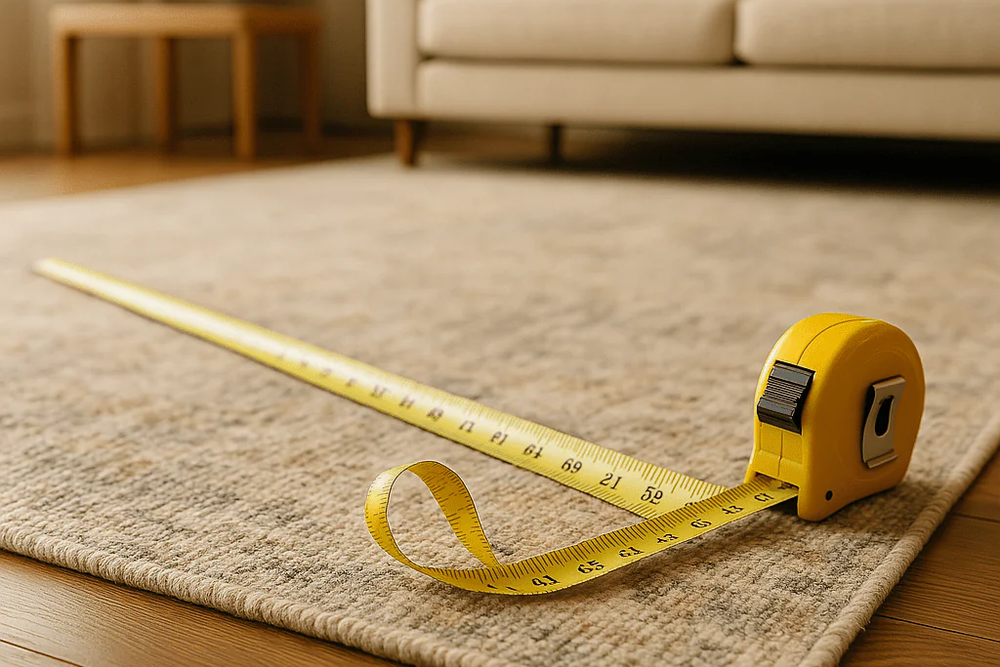
If there's one mistake that shows up in virtually every home, it's a rug that's too small.
A rug floating in the center of a living room, untethered from any furniture. A bedroom rug that stops inches past the bed frame. A dining room rug where the chairs catch the edge every time someone stands up. It's the most common — and most fixable — decorating problem out there.
The good news: rug sizing isn't complicated once you understand the rules. This guide walks you through exactly how to choose the right rug size for your living room, dining room, bedroom, entryway, and beyond. Follow these guidelines and you'll never wonder "is this rug too small?" again.
The Universal Rule: When in Doubt, Size Up
Before we get into the room-by-room breakdown, here's the one principle to carry through every decision: almost everyone goes too small, and almost no one goes too large.
A larger rug makes a room feel bigger, more cohesive, and more intentional. A smaller rug makes a room feel disjointed — like furniture floating on an island rather than a space that was designed. If you're choosing between two sizes and can't decide, take the larger one.
Standard Rug Sizes: What's Available
Knowing the standard sizes before you start measuring helps you shop with a target in mind. Here's the lineup you'll encounter most often:
- 2x3 / 2x4 — Accent rugs, in front of a sink, small entryway
- 3x5 — Small accent, entryway, bathroom
- 4x6 — Small bedroom, small office, accent under a coffee table in a tiny space
- 5x7 / 5x8 — Small living room, home office, smaller bedroom
- 6x9 — Medium living room, small dining room, medium bedroom
- 8x10 — The most versatile size. Works for most living rooms, dining rooms, and under queen beds. If you only know one size, know this one.
- 9x12 — Large living rooms, open floor plans, under a king bed, larger dining rooms
- 10x14 — Expansive spaces, large sectionals, statement rooms
- Runners (2x8, 2x10, 2x12) — Hallways, kitchens, alongside a bed
Living Room Rug Size
The living room is where rug sizing matters most — and where the most mistakes happen. The rug should anchor your seating area, not decorate an empty patch of floor.
The Goal
The rug needs to visually connect your furniture into a unified conversation zone. Furniture that sits near a rug but not on it creates the feeling that everything is floating.
Your Options
All legs on: Every piece of furniture in your seating area — sofa, chairs, accent tables — sits fully on the rug. This works best in larger rooms and creates the most polished, cohesive look. You'll typically need a 9x12 or larger.
Front legs on: The front legs of the sofa and chairs rest on the rug, back legs off. This is the most common approach and works well in most living rooms. An 8x10 usually does the job here.
No legs on (coffee table only): Only the coffee table sits on the rug. This only works in very small spaces and with a rug large enough that the furniture feels related to it rather than disconnected from it. Avoid this approach if you can.
Sizing Tips
- Make sure the rug extends at least 6–8 inches beyond each side of your sofa
- In open floor plans, the rug defines the "room within a room" — size it to contain the full seating area
- Typical living room rug sizes: 8x10 (most common), 9x12 (larger rooms), 10x14 (large sectionals or expansive spaces)
Dining Room Rug Size
The dining room has one non-negotiable rule, and getting it wrong is immediately noticeable every time someone sits down.
The Rule: 24 Inches Beyond the Table on Every Side
Your rug needs to extend at least 24 inches past the edge of your dining table on all sides. Why? Because when someone pulls their chair back to sit down or stand up, the chair legs need to stay on the rug. If the rug ends before the chairs clear the table, the legs catch the rug edge — every single meal.
For more generous clearance, especially with larger chairs, aim for 30–36 inches beyond the table edge.
Size by Table Size
| Table Size | Seats | Recommended Rug Size |
|---|---|---|
| Small / round (under 48") | 4 | 6x9 |
| Medium (60–72") | 6 | 8x10 |
| Large (72–84") | 8 | 9x12 |
| Extra large (84"+) | 10+ | 10x14 |
Additional Tips
- Choose a low-pile or flatweave rug for dining rooms — chairs roll and move more easily on flat surfaces
- Patterns and darker colors are practical here; dining rooms see spills
- Center the rug under the table; use painter's tape on the floor to visualize the size before you buy
Bedroom Rug Size
The bedroom rug's job is to make getting out of bed a pleasant experience. Your feet hit the rug first thing in the morning — it should feel soft, look generous, and make the room feel complete.
Placement Options
Full under the bed: The rug extends under the entire bed, including the nightstands, with 18–24 inches showing on all sides. This is the most luxurious look. You'll need a large rug — 9x12 under a king, 8x10 under a queen at minimum.
Two-thirds under the bed: The rug starts at about the midpoint of the bed (under the lower half) and extends 18–24 inches past the foot and sides. This is the most common and practical approach for most bedrooms. Allows a smaller (but still generous) rug.
Runners alongside the bed: Two runners placed on each side of the bed. Works in narrow rooms or as a design statement.
Size by Bed Size
| Bed Size | Recommended Rug Size |
|---|---|
| Twin | 5x8 (centered under/beside bed) |
| Full | 6x9 or 8x10 |
| Queen | 8x10 (most common), 9x12 for a more generous look |
| King | 9x12 (minimum), 10x14 for full coverage with nightstands |
Common Mistake to Avoid
Don't place a small accent rug at the foot of the bed alone. It's a design instinct that almost never lands well — the rug looks like an afterthought rather than an anchor. Go bigger or choose one of the placement approaches above.
Entryway Rug Size
The entryway rug has one job: welcome people in and set the tone for the rest of your home. It doesn't need to be large, but it needs to be proportionate.
Guidelines
- The rug should span most of the width of your entryway, with 4–6 inches of floor showing on each side
- It should extend from just inside the door to the beginning of the next space
- In a narrow entryway, a runner (2x8 or 2x10) is the right move
- In a wider foyer, a 3x5 or 4x6 works well; a 5x8 for a more open entry
Practical Notes
Entryways are high-traffic, high-mess zones. Choose a rug with durable construction — indoor/outdoor materials, low pile, or flatweave — and avoid light colors unless you're committed to frequent cleaning.
Hallway Rug Size
Hallway runners should run the length of the hallway, leaving 4–6 inches of floor visible on both sides and at each end (if the hallway ends at a wall rather than a doorway).
Standard runner sizes are 2x8, 2x10, and 2x12. For longer hallways, you may need to piece runners together or order a custom size. When piecing, leave a small consistent gap between rugs rather than butting them together.
Home Office Rug Size
The home office rug anchors the desk area and defines the workspace within a larger room.
- For a dedicated office room, treat it like a small living room: 5x8 or 6x9 with the front legs of your desk chair on the rug
- If the desk is against a wall, a 4x6 or 5x7 centered in front of the desk works well
- Make sure the rug extends far enough that your chair rolls on it, not on bare floor — this is both more comfortable and better for your floors
How to Measure Before You Buy
The number one way to avoid a sizing mistake is to map it out before you order. Here's how:
- Measure your room — length and width, floor to floor
- Mark your furniture placement — know where your sofa, chairs, and table are positioned
- Use painter's tape on the floor to outline the rug size you're considering. Live with it for a day. Walk around it. Sit in your furniture. You'll immediately know if it's the right size.
- Leave 6–18 inches of floor between the rug edge and the walls in most rooms. This "breathing room" keeps the rug from looking like wall-to-wall carpet.
Quick Reference: Rug Size by Room
| Room | Most Common Size | Notes |
|---|---|---|
| Small living room | 6x9 or 8x10 | Front legs on rug |
| Medium living room | 8x10 | Front or all legs on |
| Large living room | 9x12 or 10x14 | All legs on |
| Dining room (6-seat table) | 8x10 | 24" beyond table on all sides |
| Dining room (8-seat table) | 9x12 | Same rule, larger table |
| Queen bedroom | 8x10 | Extends 18-24" past sides and foot |
| King bedroom | 9x12 | Extends 18-24" past sides and foot |
| Entryway | 3x5 or 4x6 | Runner for narrow entries |
| Hallway | 2x8 to 2x12 (runner) | 4-6" floor showing on sides |
| Home office | 5x7 or 5x8 | Chair rolls on rug |
Still Not Sure? We're Here to Help
Rug sizing depends on your specific room dimensions, furniture layout, and the look you're going for — and sometimes a general guide only gets you so far. If you measure your space and still feel uncertain, reach out to our team. We help people find the right rug every day, and we're happy to look at your measurements and point you in the right direction.
Browse our full collection by size, or use the filters to shop by room. And remember: when in doubt, go bigger.
Ready to shop by size? Browse our 8x10 rugs, 9x12 rugs, or runners — or contact us if you'd like a recommendation.
Recent Posts
-

Rug Size Guide: How to Choose the Right Size Rug for Every Room
If there's one mistake that shows up in virtually every home, it's a rug that's too small. A rug flo
-
The Best Rugs and Home Décor for Summer 2026
Summer is the season that exposes every room in your house. The light shifts, the windows stay open,